
Think of Yourself Less
How a Forgotten Victorian Poem on the Violet Taught Me the Power of Humility

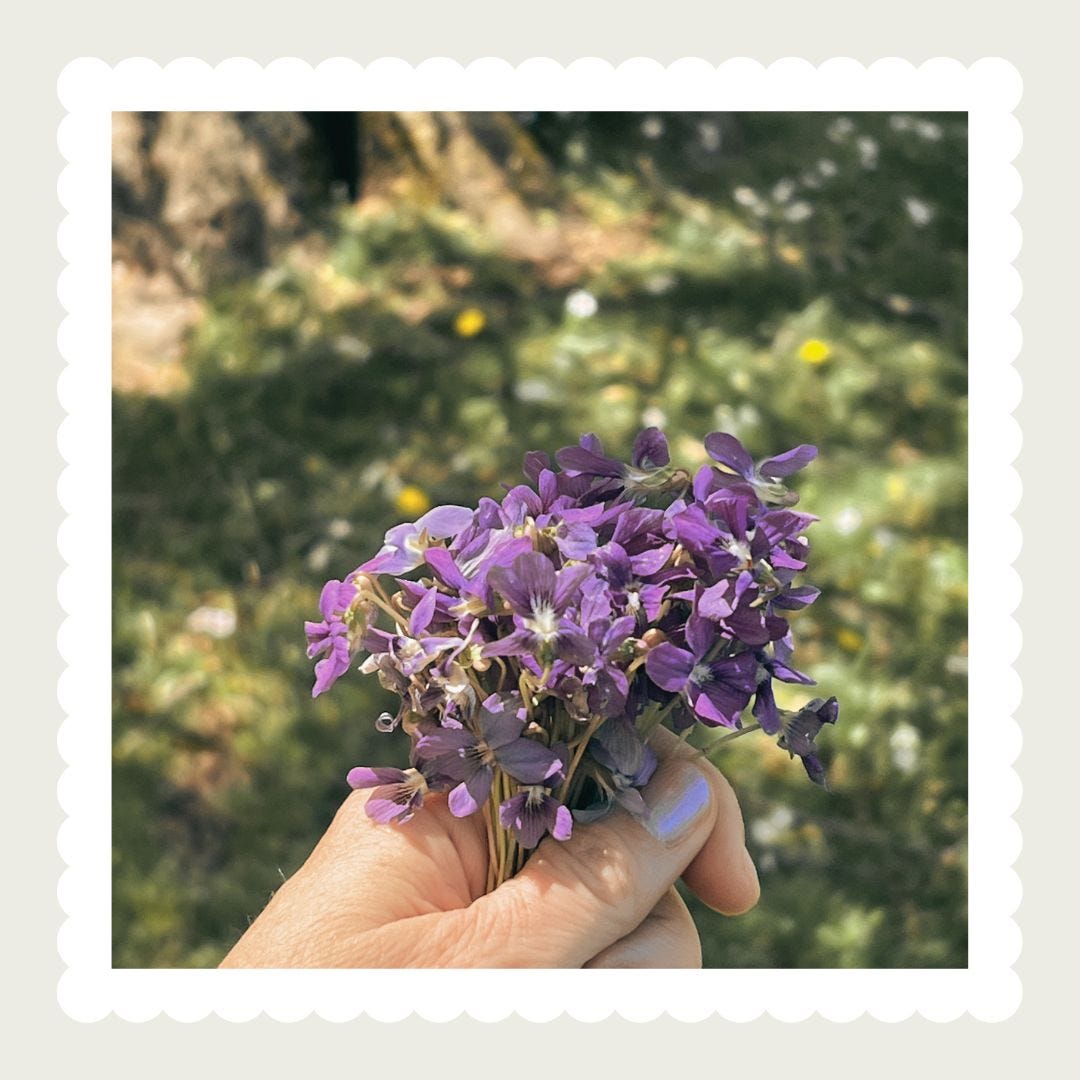
A long-standing habit of mine is collecting literature by women writers from the 1800s, my favorite era for women's writing, when the first stirrings of feminism were just beginning to surface, and women were questioning their roles in family and society, and what it meant to be, well, a woman in the emerging modern world. Often, this overlooked realm of literature is deeply connected to nature. A thread I find myself drawn to as a writer, feeling a kindred connection among the female voices of the distant past.
Women of that time wrote of the effects of landscape on a person, as in Willa Cather's My Antonia, or of cotton-tailed bunnies in a garden, as in Beatrix Potter's The Tale of Peter Rabbit. Most often, their voices can be found in the rhythms of children's rhymes or the stanzas of poems. It is in this spirit that I share Jane Taylor's poem, The Violet, published in 1833 in Little Ann and Other Poems, co-authored with her sister Ann, in honor of our selected plant for May.
The Violet
By Jane Taylor
Down in a green and shady bed,
A modest violet grew,
Its stalk was bent, it hung its head,
As if to hide from view.
And yet it was a lovely flower,
Its colours bright and fair;
It might have graced a rosy bower,
Instead of hiding there,
Yet there it was content to bloom,
In modest tints arrayed;
And there diffused its sweet perfume,
Within the silent shade.
Then let me to the valley go,
This pretty flower to see;
That I may also learn to grow
In sweet humility.
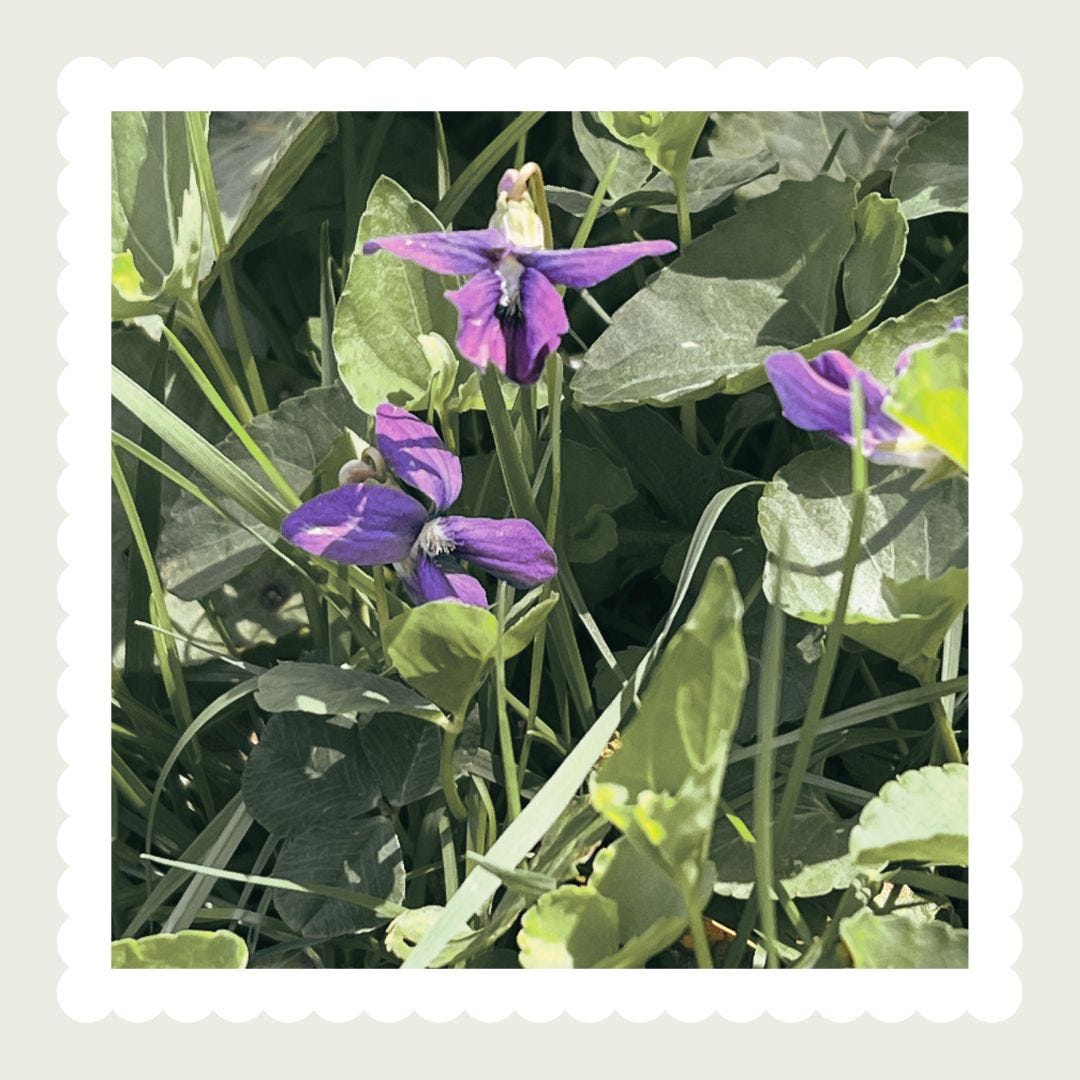
In the closing stanza, Taylor asks to learn from the violet’s example; to grow in sweet humility. A line that resonates differently today, in an age that tells us to put ourselves first, to treat ourselves, to build a life centered on our own needs. The violet offers a gentler counterpoint. Not to think less of ourselves, but to think of ourselves less.
The violet’s herbal gifts reflect this same generosity. A remedy to turn to in the mid-spring months for soothing dry throats, softening congestion, and humidifying airways worn thin by cold air. Found low to the ground, in the shade beneath trees, violets do their best not to be seen, yet are unforgettable once noticed. To craft with violets is a delicate practice. Although robust and hardy while in the earth, once picked, they wilt quickly and are tricky to dry, at least, in my experience. They blend well with sugar and are a surprising dainty touch when added to salads, cakes, and cookies.
The violet, it seems, has always done its finest work in the shade, and so, in many ways, did the author of the poem above, Jane Taylor. Once one of the most widely read women in the English-speaking world, her name has since faded into the kind of historical obscurity that claims so many writers of her era. Yet discover her again, and she is impossible to overlook. Taylor is the hand behind Twinkle, Twinkle, Little Star, a rhyme sung daily by millions of children and families around the world, most of whom have never known her name. Like the violet tucked beneath the trees, she has been there all along, generous, enduring, and waiting to be found.
Notes
https://digital.library.upenn.edu/women/taylor/little-ann/little-ann.html#violet
https://www.encyclopedia.com/women/encyclopedias-almanacs-transcripts-and-maps/taylor-ann-and-jane
https://www.poetryfoundation.org/poets/jane-taylor
https://thethingsthatcatchmyeye.wordpress.com/tag/jane-taylor/
Loved reading this - there is not enough poetry in my life!
This is so sweet! I loved learning about Jane Taylor and can’t wait to read more of her work - and her insight from violets was so lovely.